
A practical tribute-film guide
How to create a meaningful tribute film.
Turn family photographs, home movies, recorded voices, and music into a film that honors a life and brings people together.
Discuss your tribute
The big picture
Begin with the memories.
Build around the life.
A meaningful tribute film begins with the memories that matter most. Before shaping the story, think about the person’s life, the people who made it special, and the moments your family will want to carry forward.
The life before
Early years, family milestones, work, passions, and the moments that shaped them.
The people and places
Family, friends, community, traditions, and the places that meant something.
The legacy that continues
Values, lessons, favorite sayings, and the impact they leave behind.
A step-by-step approach
From photographs to a lasting story.
-
01
Gather the photographs.
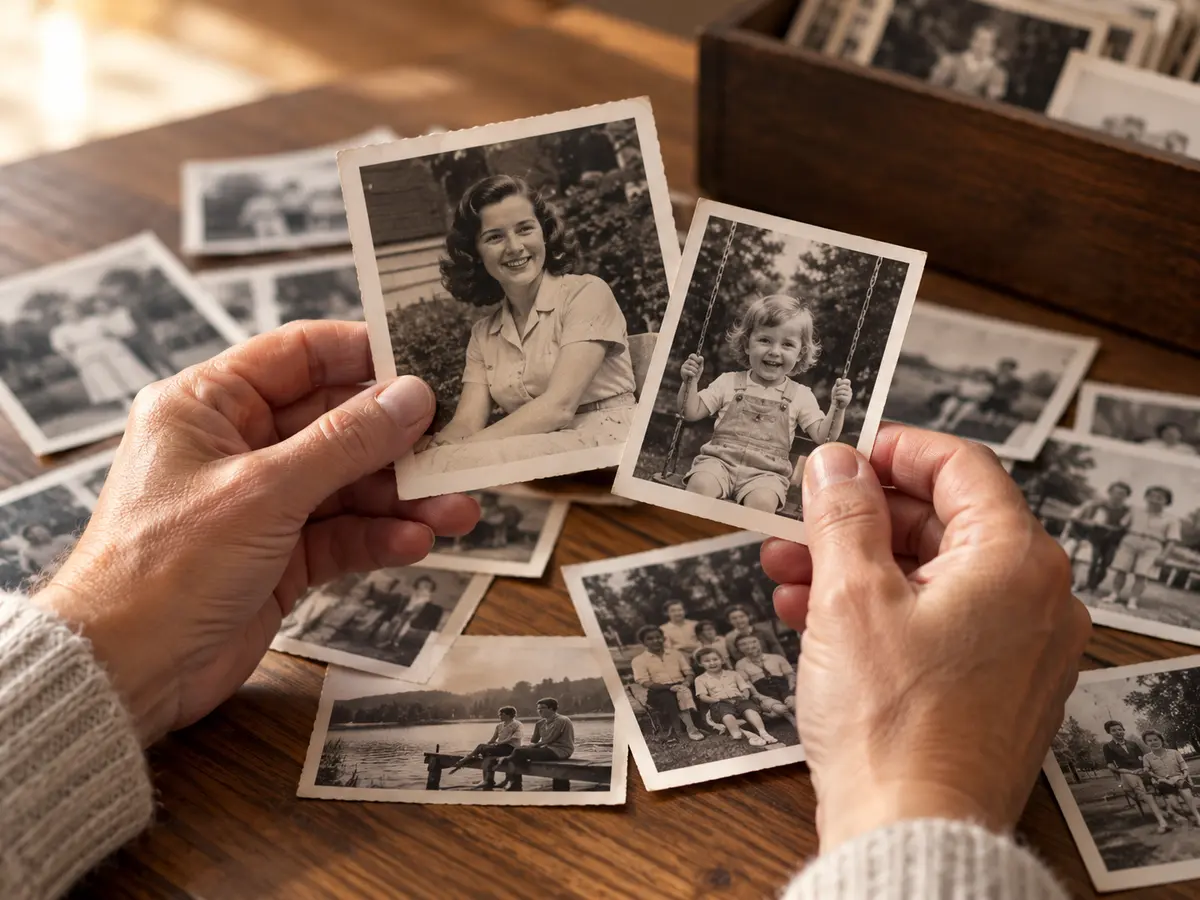
Look through photographs, albums, phones, and family collections. Include everyday moments as well as significant events—a mix of eras and ordinary details often tells the richest story.
-
02
Find the story.
Look for the moments, relationships, and themes that best reflect their life. You might follow time from early years forward, or focus on family, work, hobbies, and the values they lived by.
-
03
Choose voices and music.
Recorded voices, meaningful songs, and familiar sounds can add depth and emotion. You might include a personal message, a family interview, or music that always brought a smile.
-
04
Shape the film.
Bring photographs, home movies, voices, and music into a clear emotional arc: a beginning that sets the scene, a middle that shares the heart of the story, and a closing remembrance.
-
05
Review and share.
Watch the film, make final changes, and decide where it will be shown. Keep a family copy and confirm permission before sharing it more widely.
What makes the final cut
Three things matter most.
A strong tribute film balances meaning, clarity, and permission. Keep these in mind as you plan.
Meaning
Represent the person truthfully, with care and authenticity.
Clarity
Keep the story understandable and focused on what matters most.
Permission
Be thoughtful about what you include and confirm approval before photographs, voices, or music are shared beyond the gathering.
A story unfolds in chapters
A life has many chapters.
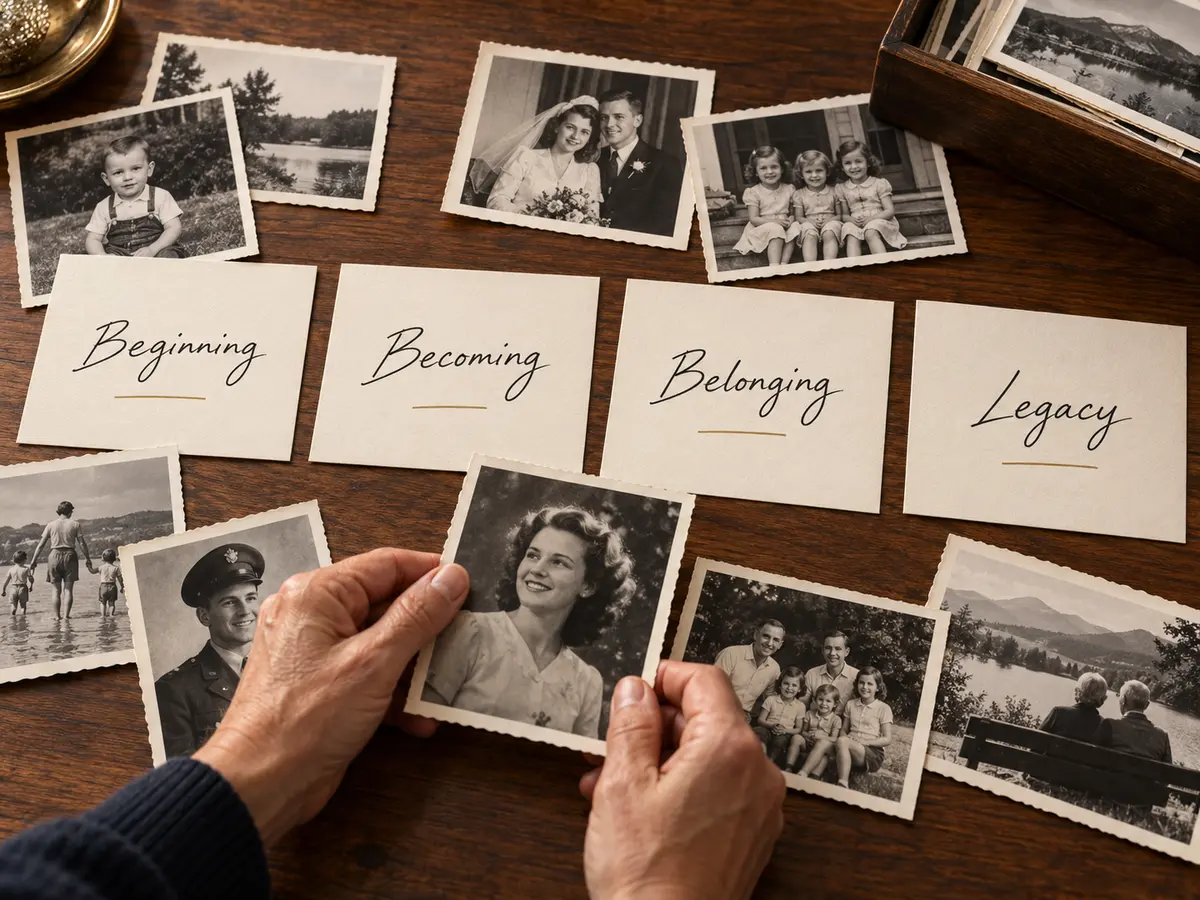
A tribute film often follows a natural arc, moving from early years to lasting impact.
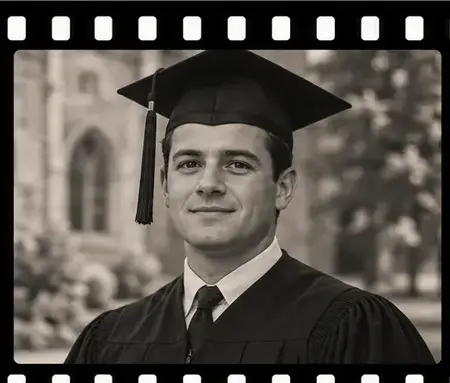
Beginning
Early years and roots
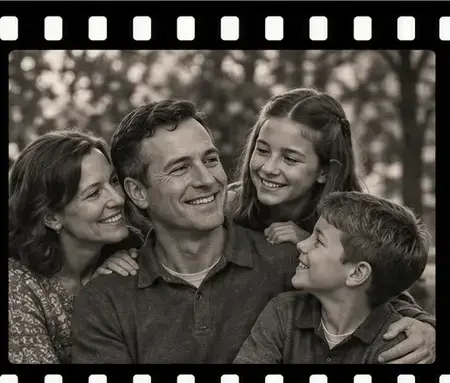
Becoming
Growth, work, and passions
Belonging
Family, friendships, and community

Legacy
Lasting impact and continuing influence
Finding the right rhythm
Photo pacing and film length.
The right pace gives people time to feel, remember, and reflect. The exact length depends on the photographs, recordings, and story your family wants to tell.
About 10–25 photographs
About 25–75 photographs
About 75–150 photographs
These are planning ranges, not rules. The story and pacing matter more than the numbers.
A simple preparation
A helpful checklist.
A little preparation can make the process smoother and help your family get the most from the tribute film.
- Gather digital photographs, printed photographs, and home movies.
- Note meaningful songs and any recordings you would like to include.
- Collect recorded voices, voicemails, or family interviews.
- List meaningful moments or song ideas.
- Gather names, dates, places, and short notes.
- Share your vision, preferences, privacy needs, and special requests.
- Keep everything together in one clearly labeled box or folder.
Common questions
Answers to frequently asked questions.
A short tribute may use about 10 to 25 photographs, while a fuller story may use 75 to 150. The right number depends on the film length, variety in the archive, and the story your family wants to tell.
Many families choose three to five minutes for a balanced tribute. One to two minutes can work for a short remembrance, while six to ten minutes allows room for a fuller life story.
Yes. Printed photographs can be carefully scanned, and compatible home movies can be included. Organize what you have, but do not delay asking for help because the archive is not perfect.
Yes. A familiar voice or carefully chosen song can add emotional context. Confirm that the family has permission to use recordings, photographs, and music wherever the film will be shown or shared.
Timing depends on the amount and condition of the material, the film length, and the family review. If the film is needed for a scheduled service, share that date as early as possible.
Let’s talk
A short conversation can bring your ideas to life.
You do not need to have every photograph or recording organized before reaching out.